Meditation
The Hour Before the Town Wakes
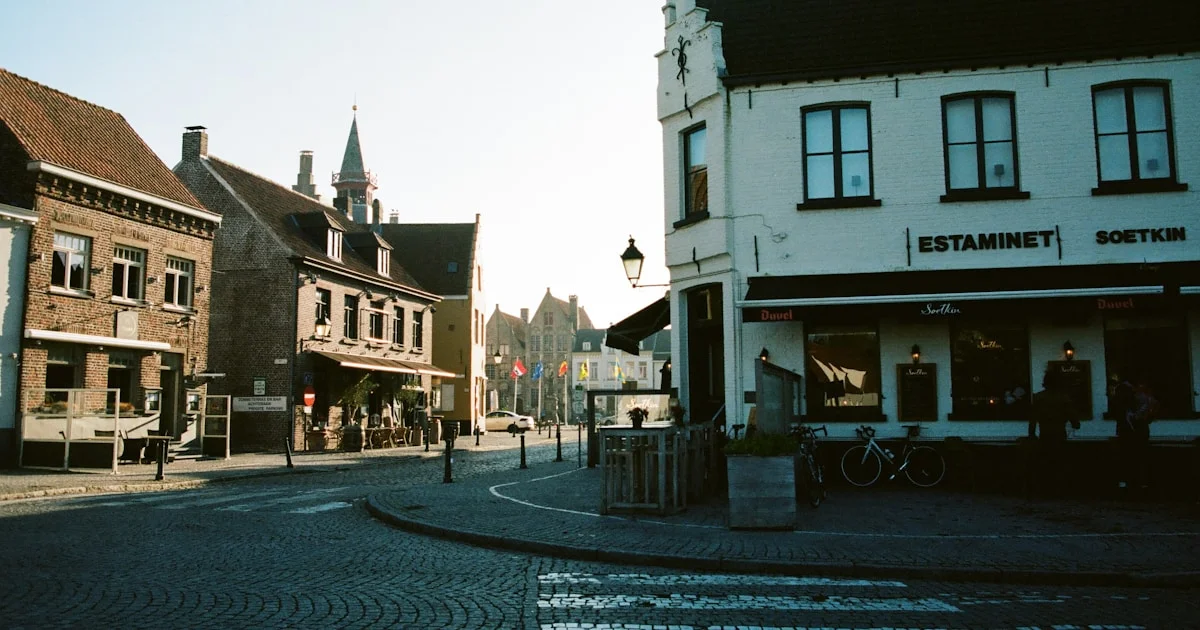
Photo: Mark Pecar on Unsplash
"The real voyage of discovery consists not in seeking new landscapes, but in having new eyes."
— Marcel Proust
The light hasn’t yet decided what color it wants to be.
I stand at the edge of the piazza, coffee in hand, watching the sky perform its slow alchemy. Not quite blue. Not quite gold. Something in between that has no name, a shade that exists only in these moments before the machinery of day begins to turn.
The cobblestones are still dark with last night’s dew. In an hour they’ll be warm, dusty, crossed by dozens of feet. But now they hold the cold of night like a secret they’re reluctant to share.
I’ve been coming to this square for years, always at this hour. Not because I’m disciplined. Because I can’t sleep here the way I sleep at home. My body refuses to adjust, and so I find myself awake when the town is not, wandering out into streets that feel like they belong to a different century, a different life.
The Unspoken Transaction
The café where I bought this espresso wasn’t supposed to be open. But the owner, a man whose name I’ve never asked despite years of these encounters, saw me through the window and waved me in. He was mopping the floor. The chairs were still on the tables. He made my coffee anyway, as if opening early for a ghost was just part of the routine.
We didn’t speak. There’s a silence between people who meet at this hour that words would only diminish. He handed me the cup, I left coins on the counter, and I walked out into the emptiness.
This is the transaction that defines these mornings. Small gestures. Unspoken understanding. The recognition that some moments are too fragile for conversation.
Ownership of the Empty
A cat crosses the square with the confidence of ownership. She knows, as I do, that these stones belong to us right now. The pigeons haven’t descended yet. The shopkeepers are still dreaming. The tourists who will flood this space by noon are hours away, sleeping off last night’s wine in rented apartments with windows that don’t quite close.
The cat disappears under an archway, and I’m alone again.
This is what I came for, though I didn’t know it when I started. Not the architecture. Not the history. Not even the beauty, though beauty is here in abundance. I came for this feeling of existing outside time, of standing in a space that humans built centuries ago and finding it, for just this moment, returned to something older than human activity.
The square was here before I was born. It will be here after I die. But in this hour, it exists only in my experience of it. No one else is watching the light change on these walls. No one else is noticing how the fountain’s sound is louder in the absence of other noise.
This is not solitude born of loneliness. It’s solitude born of choice. The deliberate stepping aside from the river of human doing to stand on the bank and watch.
The Mornings We Miss
I think about all the mornings I’ve missed. The thousands of dawns that happened while I slept, or commuted, or stared at screens. The light performed its ritual whether I watched or not. The world renewed itself in my absence.
But you can’t think this way for long. Regret is a poison that ruins even the moments you managed to capture. Better to be here, now, watching this particular dawn in this particular square, than to mourn all the ones that came before.
A shutter opens somewhere above me. The first human sound of the day - wood scraping against stone, hinges that need oil. I don’t look up. I don’t want to see a face yet, don’t want to be pulled back into the social world where you acknowledge people and are acknowledged in return.
Let them think I didn’t hear. Let the morning stay quiet a little longer.
When the Light Decides
The light has made its decision now. Gold. The walls are turning from gray to honey, and I can feel the warmth beginning to gather in the air. Another hour and this will be a different place entirely - bustling, loud, full of commerce and greeting and the ordinary business of being human.
I don’t resent that version of the square. It has its own pleasures. But I’ve learned that I need this version first. The empty stage before the actors arrive. The canvas before the paint.
There’s a bakery opening now. I can smell the bread, or maybe I’m imagining it. Either way, the scent mixes with the coffee cooling in my hand and creates something that feels like home, though I’m thousands of miles from where I actually live.
That’s the strange mathematics of travel. Distance from home doesn’t always mean distance from belonging. Sometimes you find yourself more fully present in a foreign square at dawn than you ever managed to be in your own kitchen.
The Gift of Jet Lag
I’ve tried to explain this to people. The importance of arriving somewhere and immediately abandoning sleep schedules, surrendering to jet lag as if it were a gift rather than an affliction. Wake when you wake. Sleep when you must. Let your body exist in its own confused rhythm rather than forcing it into local time.
Most people think I’m making excuses for poor planning. Maybe I am. But the mornings I’ve found this way - in Rome, in Lisbon, in small towns whose names I’ve already half forgotten - these mornings have given me something that perfectly planned days never could.
A church bell rings. One clear note, then another. Not calling anyone to mass, just marking time. The town is beginning to stir now. I can feel it in the air, a subtle change in pressure, the way a forest changes when a predator enters.
Not that the waking town is predatory. But it is something I’ll need to engage with, to navigate, to perform for. The hours ahead will require me to be someone - a tourist, a customer, a foreign body moving through local space.
For now, I can just be a person standing in a square, watching light.
The Brotherhood of Dawn
The second coffee arrives without my asking. The café owner has emerged to set out chairs, and he brings it to me where I stand, still not ready to sit. He says something in dialect I don’t catch, maybe a comment about the weather, maybe just an acknowledgment that I’m here again, same as always, haunting his morning.
I nod, which serves as thanks and greeting and agreement all at once. He returns to his work.
This is the kindness I’ve found in early mornings across dozens of places. The people who work at dawn seem to recognize each other across language and culture. We’re all awake when we shouldn’t be, all tending to the world before it demands to be tended.
There’s no hierarchy in this hour. The man mopping floors and the guest drinking coffee occupy the same strange space, both early, both quiet, both waiting for the day to properly begin.
The Signal to Leave
The first tour group appears at the far end of the square. German, I think, from the cadence of the guide’s voice carrying across the stones. They move slowly, cameras raised, following flags and printed maps.
This is my signal to leave.
Not because I judge them - I’ve been that tourist, following that flag, listening to that guide explain what I should notice about the architecture. There’s nothing wrong with arriving at a place and being told its story.
But the story I come for can’t be narrated. It’s the story of light and silence, of coffee and cobblestones, of an hour that exists outside the schedule. And that story ends when the scheduled world arrives.
I drain the last of my second espresso, leave more coins on the table the owner has now set out, and walk toward a side street that leads away from the gathering crowd.
The cat reappears as I pass the archway, watching me with the same calm judgment she bestows on everything. We exchange a look that might be mutual recognition.
Then I’m gone, moving through streets that are slowly filling with life, carrying nothing but the morning in my memory.
What Remains
Later, I’ll do the things tourists do. Visit the church. Photograph the view. Buy something small and unnecessary that will remind me of this place when I’m home.
But I’ll do those things differently because I started here, in the hour before the town woke. I’ll move through the crowded streets remembering how they looked when they were empty. I’ll hear the tour guide’s explanations knowing there are things he cannot explain.
The morning I keep is not the one in the guidebook. It’s the one that happens before the guidebook begins.
And tomorrow, if my body refuses again to accept the time zone it finds itself in, I’ll return to the square and stand at its edge once more, watching light that hasn’t yet decided what color it wants to be.
That’s the agreement I’ve made with travel. I give it my sleep, my schedule, my carefully planned days. In return, it gives me mornings like this.
So far, the exchange seems fair.
The Lesson That Won’t Translate
What do we learn from empty squares at dawn? I’m not sure I can say. The lesson doesn’t translate into language any more than the color of that early light does.
Maybe it’s something about attention. About presence. About the way places exist differently when no one is demanding anything from them.
Or maybe it’s simpler than that. Maybe it’s just that some hours are more real than others, and the ones we spend alone, before the world begins its asking, are the realest of all.
I don’t know.
But I’ll be back tomorrow, if sleep refuses me again. Standing at the edge of the square. Watching the light make up its mind.
Waiting for the hour to end, and hoping it never does.